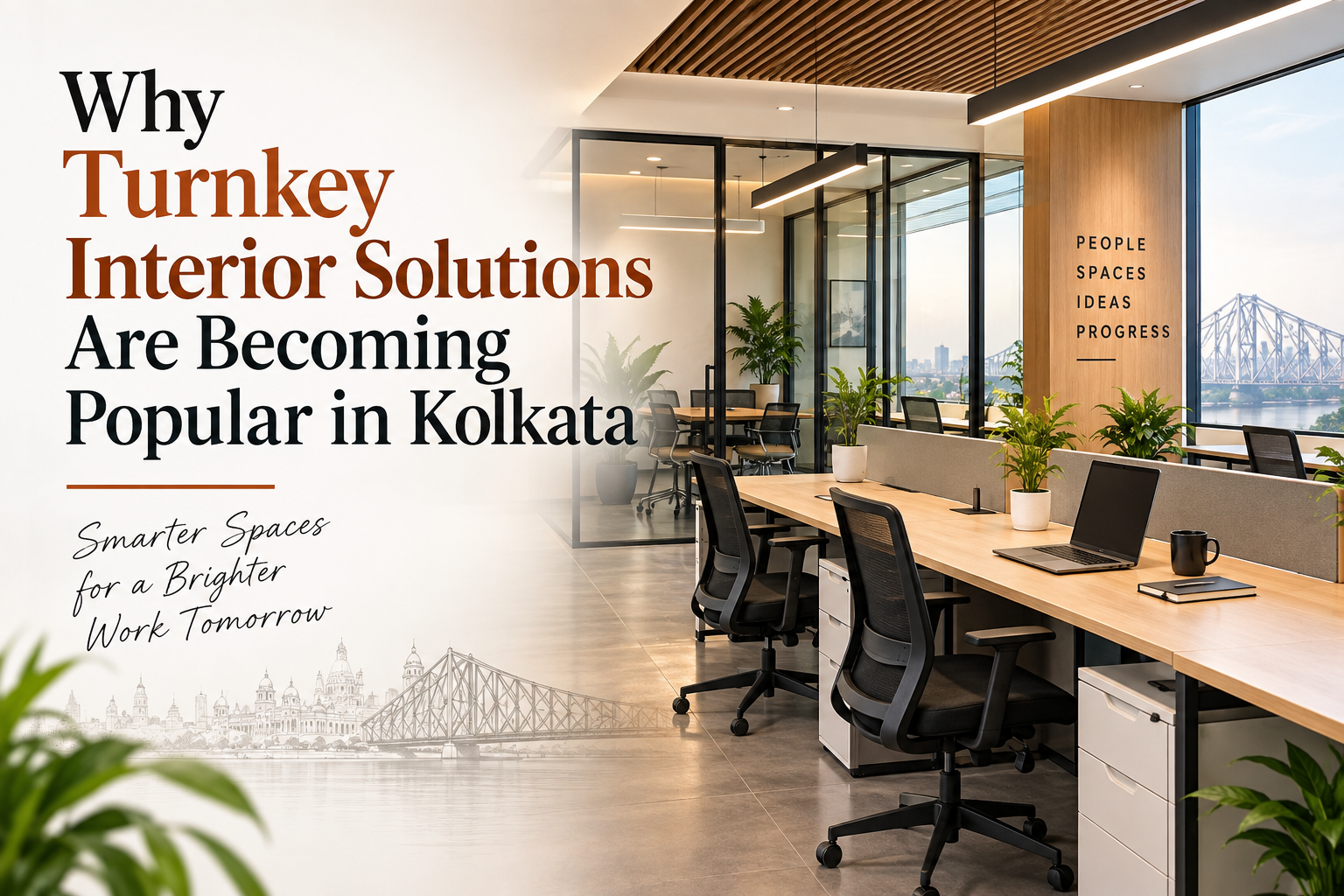
Setting up a new office is exciting, but anyone who has actually been through the process knows that it can quickly become complicated. From planning the layout and choosing materials to coordinating electricians, carpenters, painters and furniture suppliers, there are many small details that need attention. This is one of the reasons Office Interior Solutions are becoming increasingly popular among businesses in Kolkata. A turnkey interior solution makes the entire process much simpler. Instead of dealing with several different contractors and trying to make everything work together, the complete project is handled by one professional team. The design, execution, furniture, electrical work, lighting, flooring and finishing can all be planned and managed under one roof.
Making Office Interior Projects Easier
A well-designed office is not simply about making a workplace look attractive. The space needs to work for the people using it every day. Employees need comfortable workstations, meeting rooms need privacy, reception areas should create the right first impression and common spaces should feel welcoming. This is where professional Office Interior Design makes a real difference. A turnkey team looks at the office as one complete space and plans everything together rather than treating each part as a separate job. For a business owner, this also means fewer people to coordinate. Instead of constantly following up with different vendors, there is one team responsible for taking the project from the initial idea through to completion.
Better Control Over Time and Budget
One of the biggest concerns during an office renovation or new setup is the possibility of unexpected delays. A delay in electrical work can affect false ceilings, which can then delay painting and furniture installation. When different contractors are working independently, one small problem can easily affect the entire schedule. Turnkey Office Interior Solutions bring these different stages together under a coordinated plan. The team can schedule the work according to the requirements of the project, allowing different activities to move forward in the right sequence. It can also make budgeting easier. Rather than receiving separate quotations from multiple vendors, businesses can have a clearer understanding of the overall project cost from the beginning. While changes can still happen during any interior project, having one team managing the work can make communication and cost tracking much more straightforward.
A Consistent Design From Start to Finish
Imagine walking into an office where the reception has a modern corporate feel, but the workstations, lighting and meeting rooms seem to belong to completely different spaces. Even good individual elements may not create a cohesive environment when they are planned separately.
Professional Office Interior Design focuses on creating a consistent visual and functional language throughout the workplace. Colours, furniture, lighting, partitions, flooring and materials can be selected to complement one another. This is particularly important for businesses that want their office to reflect their brand. A thoughtfully designed workplace can communicate professionalism to clients while creating a comfortable environment for employees.
Designed Around the Way People Work
Modern offices in Kolkata are changing. Businesses are looking beyond rows of desks and are creating spaces that support collaboration, focused work, meetings and informal interaction. A turnkey interior designer can understand how a business operates before developing the layout. The number of employees, departments, meeting requirements, storage needs and available space can all influence the final design. This personalised approach is one of the reasons businesses are increasingly considering professional Office Interior Solutions instead of simply purchasing furniture and arranging it within an empty office.
One Team, One Responsibility
Perhaps the biggest advantage of a turnkey project is convenience. When the same team is responsible for the design and execution, there is less room for confusion between the concept and the finished space. The designer understands the original vision, while the execution team understands exactly how that vision needs to be delivered. This connection can help maintain the quality and appearance of the final office. For business owners who are already managing employees, clients and daily operations, having a professional team take responsibility for the interior project can remove a considerable amount of stress.
Why Kolkata Businesses Are Looking at Turnkey Interiors
Kolkata has a diverse business landscape, from established corporate offices to startups, creative studios, retail businesses and professional practices. Each type of workplace has different requirements, and businesses are becoming more conscious about how their physical environment affects productivity, client experience and brand identity. With limited time and the need for efficient project management, turnkey Office Interior Solutions offer a practical way to create a complete workplace without the hassle of coordinating every individual service. Good Office Interior Design is ultimately about more than appearance. It is about creating a space where people can work comfortably, clients feel welcomed and the business can function efficiently.
As Kolkata’s commercial spaces continue to evolve, turnkey interior solutions provide businesses with a more organised approach to creating workplaces that are functional, attractive and suited to the way they work today.
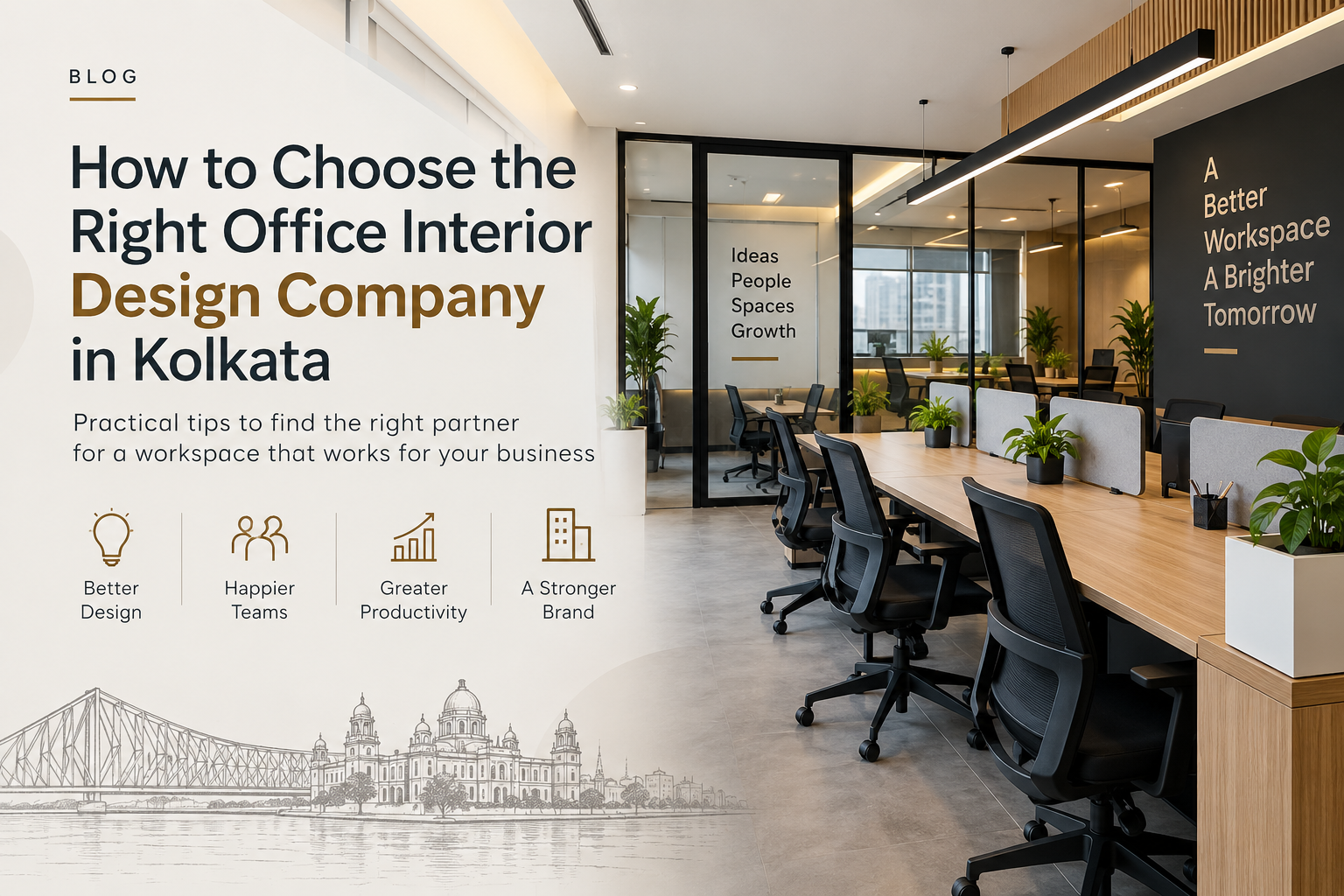
Choosing the right interior design company for your office is an important decision. An office is more than a place where employees sit and work. It represents your business, influences how people experience your brand and can have a direct impact on everyday productivity and comfort. With so many interior designers and contractors available in Kolkata, it can sometimes be difficult to know which company is suitable for your project. The right choice depends on more than attractive designs. You need a team that understands your business requirements, budget, timeline and the practical needs of your workplace.
If you are planning a new office or renovating an existing one, here are some important things to consider when selecting an Office Interior Design Company in Kolkata.
Understand Your Office Requirements First
Before approaching an interior design company, take some time to understand what you want from your new office. Think about the number of employees, departments, meeting rooms, reception area, storage requirements, workstations and common spaces. Consider how your team currently uses the office and what could be improved. A clear understanding of your requirements will make conversations with interior designers much easier. It will also help you compare different proposals based on the same expectations.
Look at the Company’s Previous Projects
Experience matters when choosing an office interior designer. Take a look at the company’s previous commercial projects and try to understand the type of spaces they have designed. A portfolio can tell you a lot about a company’s design approach, attention to detail and ability to work with different types of businesses. Look for projects that are similar to your requirements. A small corporate office, a large commercial workspace, a retail environment and a creative studio may all require completely different design approaches.
Consider More Than Just the Design
An attractive office is important, but good office interior design also needs to be practical. The layout should allow people to move comfortably around the workspace. Workstations should have sufficient space, meeting rooms should be positioned thoughtfully and storage should be planned properly. Lighting, ventilation, electrical points, acoustics and furniture also need to be considered during the planning stage. A professional Office Interior Design Company in Kolkata should be able to combine visual appeal with practical functionality.
Ask About the Complete Process
Before selecting a company, ask how they manage an interior project from beginning to completion.
A professional team should be able to explain the different stages involved, from understanding your requirements and preparing the initial concept to final execution. Depending on the project, this may include space planning, design development, material selection, furniture, electrical work, lighting, flooring, painting and other finishing work. Understanding the process beforehand can make the project easier to manage and reduce confusion later.
Check Whether They Understand Your Budget
Every business has a different budget for office interiors. A good interior design company should understand your financial limits and work towards creating a suitable solution within those boundaries. This does not necessarily mean choosing the cheapest option. Very low initial estimates can sometimes result in additional costs during execution. Ask for a clear quotation and understand what is included. Discuss materials, furniture, labour, installation and any other expected expenses before the project begins.
Pay Attention to Materials and Quality
The quality of materials used in an office can affect both appearance and durability. Since office furniture, flooring, partitions and other elements are used regularly, they need to withstand everyday wear and tear. Ask the interior company about the materials they recommend and why they are suitable for your particular workspace. A good designer should be able to explain the advantages and limitations of different materials without making the decision unnecessarily complicated.
Consider Workplace Comfort
Employees spend a significant amount of time in an office, so comfort should be part of the interior design discussion. Ergonomic furniture, suitable lighting, comfortable seating, proper circulation and good acoustic planning can make the workplace more pleasant. A well planned office can also create different zones for focused work, meetings, collaboration and relaxation. These details may not always be immediately noticeable in photographs, but they can make a considerable difference to everyday office life.
Check Communication and Project Management
Communication is one of the most important parts of an interior project. You should feel comfortable discussing changes, asking questions and receiving updates from the design team. The company should also clearly explain important decisions, costs and timelines. Ask who will be responsible for managing your project and how often you can expect updates. A company with a structured project management process can make the entire experience more organised.
Ask About Timelines
Office renovation or construction can affect normal business operations. Therefore, understanding the expected timeline is important. Ask the company how long the design and execution process is likely to take and whether there are any factors that could cause delays. While unexpected issues can sometimes arise during construction, a professional team should provide realistic expectations and communicate changes promptly.
Look for a Company That Understands Your Brand
Your office should reflect the personality of your business. For example, a technology company may want a contemporary and collaborative environment, while a professional services firm may prefer a more sophisticated and formal atmosphere. The interior designer should take time to understand your brand, employees and clients before suggesting a design. The goal should not simply be to create a visually attractive office. It should be to create a space that feels appropriate for the organisation using it.
Why Choosing the Right Interior Partner Matters
Office interior design involves many different elements, including design, planning, materials, furniture, electrical work, lighting and execution. Working with an experienced Office Interior Design Company in Kolkata can help bring these different elements together under one coordinated plan. The right company should listen to your requirements, provide practical design solutions, maintain transparency around costs and manage the project carefully from the initial discussion through to completion.
Final Thoughts
Choosing an office interior design company is a decision that deserves careful consideration. Instead of focusing only on attractive portfolio images or the lowest quotation, look at experience, quality, communication, project management and the company’s understanding of your business. Take time to discuss your requirements with potential interior designers, ask questions and compare their approach before making your decision. A well designed office can create a more comfortable working environment, present a stronger image to clients and make better use of the available space. For businesses planning a new workspace or office renovation, finding the right Office Interior Design Company in Kolkata can be the first important step towards creating a workplace that is both functional and visually appealing.
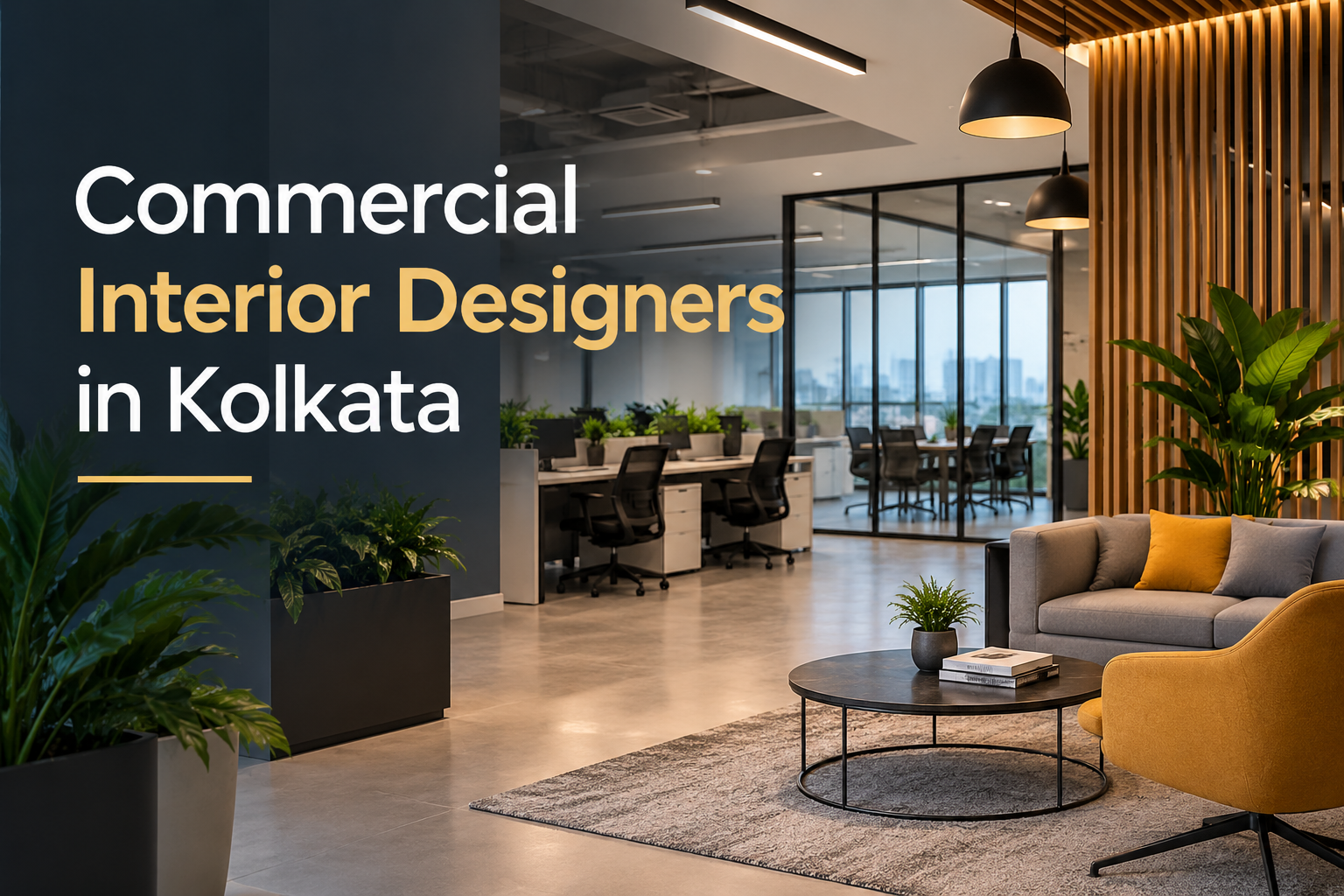
A well designed commercial space can influence how customers experience your business, how employees work and how professionally your brand is perceived. Whether you are opening a new office, renovating an existing workspace, developing a showroom or creating a modern retail environment, choosing the right commercial interior designers in Kolkata can make a significant difference to the final result. Kolkata has a diverse business environment, with established commercial areas such as Salt Lake, Sector V, New Town, Rajarhat, Park Street and EM Bypass continuing to attract offices, businesses and commercial developments. Each location and business has different requirements, which is why commercial interior design needs to go beyond simply making a space look attractive.
Why Commercial Interior Design Matters for Your Business
A commercial interior should support the way your business operates. The layout needs to make movement easy, provide comfortable working areas and use the available space efficiently. For an office, this could mean creating dedicated workstations, meeting rooms, private cabins, reception areas and comfortable staff spaces. For a showroom or retail outlet, the design needs to consider customer movement, product presentation, lighting and branding. Experienced commercial interior designers in Kolkata understand how these different requirements come together. The result should be a space that looks professional while remaining practical for everyday use.
Understanding the Needs of Kolkata Businesses
Every business has its own character. A corporate office in Sector V may require a very different interior from a boutique showroom in Park Street or a growing company setting up a workspace in New Town. Kolkata businesses are increasingly looking for interiors that combine contemporary design with practical functionality. Efficient space planning, comfortable furniture, appropriate lighting, storage and brand identity all play an important role in creating a successful commercial environment.
A good interior design team takes the time to understand your business before suggesting a design. This helps ensure that the finished space works for the people who use it every day.
Office Interior Design in Kolkata
Office interiors are one of the most important areas of commercial interior design. Employees spend a significant part of their day in the workplace, so the environment needs to be comfortable, organised and productive. A professionally designed office can include well planned workstations, meeting rooms, executive cabins, reception areas, storage solutions and staff areas. The design can also incorporate your company’s branding through colours, materials, furniture and other visual elements.
For businesses in areas such as Salt Lake, Sector V and New Town, a well planned office can also create a strong first impression when clients and visitors walk through the door.
Creating Modern and Functional Workspaces
Modern businesses need workspaces that can adapt to changing requirements. Teams may grow, departments may change and businesses may introduce different ways of working. Commercial interior designers can help create flexible spaces that make better use of the available floor area. Thoughtful planning can provide a balance between collaborative areas and spaces where employees can concentrate without distractions. The objective is not simply to fill a room with furniture. It is to create an environment where every part of the space has a purpose.
Commercial Interior Design for Showrooms and Retail Spaces
For retail businesses and showrooms, interior design has an important role in attracting customers and presenting products effectively. Lighting, display areas, customer movement, branding and product visibility all need to work together. A thoughtfully designed retail space can make it easier for customers to explore products while creating an environment that reflects the personality of the brand. This is particularly important in competitive commercial areas of Kolkata, where businesses need their physical spaces to stand out while remaining welcoming and practical.
Why Space Planning Should Come First
One of the most important parts of a commercial interior project is space planning. Before choosing furniture, colours or decorative elements, the available space should be studied carefully. Good space planning considers how people enter and move through the premises, where employees work, where customers interact with the business and where equipment or storage needs to be placed. This can help prevent wasted space and create a more comfortable environment. A smaller commercial property can also feel significantly more spacious when the layout is planned properly.
Choosing Commercial Interior Designers in Kolkata
When choosing commercial interior designers in Kolkata, look beyond photographs of completed projects. It is important to understand how the designer approaches planning, materials, execution and communication. Look for a team that takes the time to understand your requirements and can provide solutions suited to your space and budget. Experience with commercial projects can also be valuable because business interiors often involve specific functional and practical requirements.
A reliable interior design company should be able to guide you through the process from the initial concept to the completed space.
Why Businesses Choose Decor X
Decor X focuses on creating commercial interiors that combine design with everyday functionality. Each project is approached according to the needs of the business, the available space and the desired look and feel.
From office interiors and workspaces to commercial environments, Decor X brings together space planning, furniture, materials and design elements to create cohesive interiors.
Whether you are planning a new commercial space in Kolkata or looking to transform an existing one, the right design approach can help you create an environment that represents your business and works effectively for the people who use it.
Build a Commercial Space That Works for Your Business
Your commercial interior is more than just the appearance of your premises. It can influence productivity, customer experience, employee comfort and the way people perceive your brand.
If you are looking for commercial interior designers in Kolkata, Decor X can help you plan and develop a space that combines functionality, contemporary design and your business requirements. From the initial idea to the finished interior, careful planning can turn an empty or outdated space into a professional environment that supports your business.
Looking to transform your commercial space in Kolkata? Get in touch with Decor X to discuss your interior design requirements.
A corporate office is more than just a place where employees work. It represents your company’s identity, culture, professionalism, and vision. A well-planned office can improve productivity, encourage collaboration, create a better employee experience, and make a strong impression on clients and visitors.
However, creating the right corporate workspace requires much more than selecting furniture and choosing wall colours. It involves careful space planning, workflow analysis, lighting, furniture selection, technology integration, branding, and professional execution.
For businesses looking for Office Interior Design & Workspace Solutions, understanding the planning process can help create an office that is functional, attractive, comfortable, and ready for future growth.
Here is a step-by-step guide to planning a successful corporate office interior.
1. Understand Your Business Requirements
The first step is to understand how your business operates.
Before starting the design, consider:
How many employees will use the office?
How many departments need dedicated spaces?
Do you require cabins for senior management?
How many meeting or conference rooms are needed?
Do employees need collaborative or breakout areas?
How much storage is required?
Will the workforce grow in the future?
Do you support hybrid or flexible working?
Every company has different requirements. A technology company may need open collaborative spaces and meeting rooms, while a legal or financial company may require more private cabins and meeting areas.
Once your requirements are clear, the next step is analysing the available office space.
The design team should consider:
Total floor area
Existing walls and structural elements
Windows and natural light
Entry and exit points
Electrical points
Plumbing requirements
Fire safety requirements
Ceiling height
Ventilation and air-conditioning
Movement and circulation areas
Efficient space planning ensures that every square foot is used intelligently without making the office feel crowded.
For businesses looking for Office Interior Solutions Across Kolkata, professional site assessment is particularly important because commercial properties can have very different layouts and structural conditions.
3. Create an Efficient Office Layout
The layout is the foundation of your corporate office design.
A good layout should provide a logical connection between different areas while maintaining comfortable movement throughout the workplace.
A typical corporate office may include:
Reception Area
The reception is usually the first point of contact for clients and visitors. It should communicate your brand identity and create a professional first impression.
Workstations
Workstations should be positioned to provide sufficient personal space while encouraging communication and teamwork where required.
Executive Cabins
Senior management may require private cabins for meetings, focused work, and confidential discussions.
Meeting and Conference Rooms
Meeting rooms should be strategically located and equipped for presentations, video conferencing, and team discussions.
Breakout Areas
Informal seating and breakout zones give employees a place to relax, communicate, or have informal discussions.
Pantry and Refreshment Area
A comfortable pantry can become an important part of employee experience and workplace culture.
Storage Areas
Smart storage solutions help keep the office organised while reducing unnecessary clutter.
4. Focus on Employee Comfort and Ergonomics
A beautiful office is not enough if employees are uncomfortable.
Ergonomics should be considered when selecting:
Office chairs
Workstations
Desks
Computer monitor positions
Keyboard placement
Lighting
Storage
Meeting furniture
Comfortable workstations can contribute to a healthier and more productive working environment.
Modern Office Interior Design & Workspace Solutions increasingly combine aesthetics with ergonomic planning to create workplaces that support employee well-being.
5. Plan Lighting Carefully
Lighting can dramatically change the look and feel of an office.
Where possible, make maximum use of natural light. Supplement it with carefully planned artificial lighting.
Different areas may require different lighting solutions.
For example:
Workstations require comfortable task lighting.
Meeting rooms need balanced lighting for presentations and video calls.
Reception areas can use decorative lighting to create a strong first impression.
Breakout areas can have softer and more relaxed lighting.
Energy-efficient lighting can also help reduce long-term operating costs.
6. Incorporate Your Brand Identity
Your office should look and feel like your company.
Brand identity can be incorporated through:
Brand colours
Logo placement
Wall graphics
Signage
Furniture finishes
Materials
Artwork
Reception design
The goal is not to put your logo everywhere. Instead, the design should subtly communicate your company’s personality and values.
A technology company might prefer a contemporary and flexible environment, while a professional services firm may prefer a sophisticated and formal atmosphere.
7. Choose the Right Office Furniture
Furniture is one of the most important investments in an office.
The right furniture should balance:
Functionality + Comfort + Durability + Aesthetics
Depending on your requirements, you may need:
Modular workstations
Executive desks
Ergonomic chairs
Conference tables
Reception counters
Storage cabinets
Meeting room furniture
Breakout furniture
Collaborative seating
Custom modular furniture can be particularly useful when you need to maximise space or accommodate a specific office layout.
8. Integrate Technology into the Workspace
Modern corporate offices depend heavily on technology.
Technology should therefore be considered during the design stage rather than added later.
Consider planning for:
Network points
Power outlets
Video conferencing
Display screens
Charging stations
Smart meeting rooms
Cable management
Access control
Security systems
Proper planning helps avoid visible cables and unnecessary modifications after the office has been completed.
9. Consider Acoustics and Privacy
Noise can significantly affect concentration and productivity.
Open offices need a balance between collaboration and privacy.
Acoustic solutions may include:
Acoustic wall panels
Sound-absorbing ceiling systems
Meeting pods
Carpet or acoustic flooring
Partitions
Private meeting rooms
The right combination can create a workplace where employees can collaborate without disturbing colleagues who need focused working time.
10. Plan for Future Growth
A corporate office should not only meet today’s requirements.
Think about where the company will be two, three, or five years from now.
If you expect your team to grow, consider:
Flexible workstations
Modular furniture
Multi-purpose meeting rooms
Expandable storage
Flexible collaboration zones
Adaptable layouts
Future-ready planning can reduce the need for expensive renovations as your company grows.
11. Set a Realistic Budget
Before execution begins, establish a realistic project budget.
Your budget should account for:
Design fees
Civil work
Electrical work
Lighting
Flooring
False ceiling
Furniture
Storage
Branding
Technology
Material costs
Installation
Project management
It is important to balance appearance with long-term value.
Choosing extremely cheap materials may reduce the initial cost but increase maintenance and replacement expenses later.
A professional interior design team can help prioritise the areas where investment will have the greatest impact.
12. Select the Right Interior Design Partner
Choosing the right interior company can make the entire process significantly easier.
Before selecting a company, evaluate:
Previous corporate office projects
Design portfolio
Experience
Manufacturing capabilities
Quality of materials
Project management
Transparency in pricing
Execution capability
Project timelines
After-sales support
A turnkey interior partner can manage multiple stages of the project under one roof, reducing coordination between separate contractors and suppliers.
Decor-X provides end-to-end office interior services covering requirement discussions, layout planning, design, in-house manufacturing, installation, and final setup.
13. Move from Design to Execution
Once the design, materials, budget, and timeline are approved, the project moves into execution.
A typical process can include:
Requirement Discussion → Space Planning → Design → Material Selection → Manufacturing → Installation → Final Setup
Careful project management is essential at this stage.
The objective is to maintain quality while completing the project within the agreed budget and timeline.
For businesses seeking Office Interior Solutions Across Kolkata, working with an experienced local team can make site coordination and project execution more efficient.
14. Review the Workspace Before Handover
Before moving employees into the new office, conduct a complete inspection.
Check:
Furniture installation
Electrical points
Lighting
Air-conditioning
Network connections
Storage
Flooring
Doors and partitions
Branding elements
Safety requirements
Overall finishing
A final walkthrough helps identify small issues before the office becomes operational.
Why Professional Office Interior Design Matters
A professionally designed corporate office can provide benefits that go beyond aesthetics.
A well-planned workplace can help:
Improve space utilisation
Support employee productivity
Encourage collaboration
Strengthen company branding
Improve employee comfort
Create better client impressions
Support future business expansion
Maintain an organised working environment
This is why corporate office design should be treated as a strategic business investment rather than simply a decoration project.
Office Interior Design & Workspace Solutions for Modern Businesses
Modern businesses need workplaces that can adapt to changing working styles, technology, and employee expectations.
Professional Office Interior Design & Workspace Solutions combine intelligent space planning, ergonomic furniture, contemporary aesthetics, technology integration, and practical execution to create offices that work efficiently today and remain adaptable tomorrow.
Whether you are setting up a new corporate office, relocating your business, expanding your workspace, or renovating an existing office, the planning stage is the foundation of a successful project.
Office Interior Solutions Across Kolkata
Kolkata has a diverse commercial landscape, with important business hubs including Salt Lake, Sector V, New Town, Rajarhat, Park Street, and EM Bypass.
Each location and office space can have different requirements. A successful corporate office interior should therefore be designed around the company’s business operations, available space, employee requirements, and brand identity.
Decor-X provides Office Interior Solutions Across Kolkata, combining workspace planning, modern office design, modular furniture, and turnkey execution to create functional and professional workplaces.
Final Thoughts
Planning a corporate office interior requires careful consideration of space, people, technology, branding, comfort, and future growth. The best office is not necessarily the most expensive one. It is the one that uses its available space intelligently, supports the people who work there, reflects the company’s identity, and adapts to future business requirements. By following a structured planning process and working with an experienced interior design partner, businesses can transform an ordinary office into a productive, professional, and inspiring workplace. If you are planning a new corporate office or renovating your existing workspace, professional Office Interior Design & Workspace Solutions can help turn your vision into a functional workplace.
Looking for professional Office Interior Solutions Across Kolkata? Connect with Decor-X to plan a workspace designed around your business, people, and future growth.
An office is more than a place where people sit and work. It is where ideas are discussed, decisions are made, clients are welcomed and teams spend a significant part of their day. The way an office is designed can influence how people work, communicate and feel about the workplace. This is why businesses today are paying greater attention to professional Office Interior Solutions. A well planned office can make better use of available space, improve employee comfort, support collaboration and create a stronger impression on visitors and clients. For businesses in Kolkata, the demand for modern office interiors has grown as companies look for workspaces that are practical, comfortable and aligned with their brand identity.
What Are Office Interior Solutions?
Office Interior Solutions cover the planning, design, furniture, storage, layout and execution required to create a functional workplace. It is not simply about choosing attractive furniture or painting the walls. A good office interior considers how employees move through the space, where teams need to collaborate, how much storage is required, where meetings take place and how the workspace represents the business. A complete solution can include office interior design, workstations, desking systems, modular storage, ergonomic chairs, sofas, reception areas, meeting rooms and other workspace requirements. The goal is simple. Create an office that looks professional while making everyday work easier.
Why Does Office Design Matter for a Business?
Think about two offices. One has crowded desks, limited storage, uncomfortable chairs and poor movement between departments. The other has an organized layout, comfortable furniture, good lighting, clear work zones and spaces where employees can meet and collaborate. The difference is not only visual. A thoughtfully planned workplace can help employees move around more easily, find what they need, communicate with colleagues and stay comfortable during long working hours. Office design can also influence how clients perceive a company. Reception areas, meeting rooms and executive spaces often form the first physical impression of a business. That makes office interiors part of the overall brand experience.
What Should a Modern Office Interior Include?
There is no single layout that works for every business. A startup may need an open and flexible environment, while a corporate company may require private cabins, conference rooms and dedicated departments.
However, several elements are commonly important.
Functional Workstations
Workstations are where employees spend much of their working day. Their size, positioning and arrangement can have a direct effect on comfort and workflow. Modern workstation layouts can be planned around team structures, available floor space and the type of work being performed. For example, teams that communicate frequently may benefit from collaborative arrangements, while departments requiring concentration may need a quieter layout.
Ergonomic Office Chairs
An office chair should not be selected only because it looks good. Employees may spend several hours sitting at their desks, making proper support and adjustability important considerations. Ergonomic seating can contribute to a more comfortable working environment and support better workplace habits.
Smart Storage
Storage is often overlooked during office planning. Without sufficient storage, files, equipment and everyday items can quickly create clutter. Modular storage solutions can help businesses use vertical and available floor space more effectively while keeping the workplace organized.
Meeting and Collaboration Areas
Modern offices need spaces where people can discuss ideas, conduct meetings and work together. Depending on the business, this may include conference rooms, smaller meeting areas, informal discussion spaces or collaborative zones. The right combination depends on how the team actually works.
Reception and Waiting Areas
The reception area is often the first part of an office that visitors experience. A clean and thoughtfully designed reception can create a professional first impression while providing a comfortable place for guests to wait. Furniture, lighting, branding and material selection can all contribute to the overall experience.
How Office Interior Solutions Can Improve Space Utilization
Office space is expensive, particularly in busy commercial areas. A poorly planned layout can leave some areas underused while making other sections feel overcrowded. Professional space planning looks at the complete floor area and determines how different functions can be arranged more effectively. Workstations, cabins, meeting rooms, storage and common areas can be positioned according to the company’s requirements.
This is particularly useful for growing businesses. A flexible layout can make it easier to accommodate additional employees or change team arrangements without completely redesigning the office.
Office Interiors Should Reflect Your Brand
Your office can communicate a lot about your business before anyone says a word. A creative company may prefer an open, energetic environment. A professional services firm may want a more refined and formal atmosphere. A technology company may prioritize flexibility and collaboration. Colours, materials, furniture, lighting and spatial planning can all contribute to that identity. This is why good Office Interior Solutions should begin with an understanding of the business rather than simply following a popular design trend. The objective is to create a workspace that feels like it belongs to the company.
Sustainable Office Interior Solutions
Sustainability is becoming an increasingly important consideration for businesses. Companies are looking at eco conscious materials, energy efficient lighting, durable furniture and designs that can remain useful for years. A sustainable office does not have to sacrifice appearance. With thoughtful material selection and efficient space planning, businesses can create interiors that are modern, comfortable and more responsible in their use of resources. Long lasting furniture and adaptable layouts can also reduce the need for frequent replacements when a business changes or expands.
Why Turnkey Office Interior Solutions Can Be Useful
Managing an office interior project involves many moving parts. Design needs to be coordinated with furniture, materials, procurement, installation, electrical work, finishing and project timelines. A turnkey approach brings these stages together under one coordinated process. For a business owner, this can make the project easier to manage because there is a single team responsible for taking the workspace from the initial concept through execution and final handover. This approach can be especially useful for businesses that want to continue their normal operations while their new office is being developed.
Office Interior Solutions in Kolkata
Kolkata has several established commercial and business districts, each with different types of workplaces.
Businesses in Salt Lake Sector V often operate in technology, corporate and professional environments where efficient workstations and collaborative spaces are important.
New Town has developed into another major business and commercial destination, with offices ranging from startups to larger corporate workplaces.
Rajarhat, Park Street and EM Bypass also have a wide variety of commercial spaces where businesses may require modern office planning and interior execution.
Local requirements can vary depending on the building, floor area, workforce and business activity. A professional interior team can therefore assess the available space before recommending a layout and furniture solution.
Decor X provides office interior services across Kolkata, including areas such as Salt Lake, New Town, Rajarhat, Park Street and EM Bypass.
How to Choose the Right Office Interior Company in Kolkata
Choosing an interior company is an important decision because the quality of planning and execution can affect the final result. Before selecting a company, businesses should consider several factors.
Experience
Look at the company’s experience with commercial and office projects. Experience can help when dealing with practical challenges involving layouts, materials, furniture and execution.
Design Capability
A good interior company should be able to understand your requirements rather than simply showing you standard designs.
Furniture and Manufacturing
If the company can manage furniture and interior elements directly, coordination may become easier during the project.
Customization
Every business has different requirements. Look for a team that can adapt workstations, storage, furniture and layouts to your available space.
Project Management
Timelines matter in commercial interiors. Delays can affect employees, operations and business plans.
End to End Execution
A complete service covering design, procurement, execution and handover can reduce the need for business owners to coordinate with multiple vendors.
Decor X highlights in house manufacturing, customizable solutions, end to end service and on time delivery as part of its office interior offering.
Frequently Asked Questions About Office Interior Solutions
What are the main benefits of Office Interior Solutions?
Professional Office Interior Solutions can help businesses improve space utilization, employee comfort, organization, workplace appearance and overall functionality.
How much does office interior design cost in Kolkata?
There is no single price because the cost depends on office size, layout, furniture, materials, design requirements and the scope of execution. A customized assessment is the best way to determine the expected investment.
How long does an office interior project take?
The timeline depends on the size and complexity of the project. A smaller workspace may require considerably less time than a large corporate office requiring extensive furniture, construction and finishing work.
Can office interiors be customized according to a company’s brand?
Yes. Office layouts, furniture, colours, materials, branding elements and workspace zones can be planned around the company’s identity and operational requirements.
Can Office Interior Solutions include furniture?
Yes. A complete office interior project can include workstations, desks, chairs, modular storage, sofas, meeting room furniture and other workspace elements.
Are modern office interiors suitable for small offices?
Absolutely. In fact, smaller offices can benefit significantly from careful space planning. Smart furniture selection and efficient layouts can make a compact workplace feel more open and functional.
Which areas of Kolkata can benefit from professional office interiors?
Businesses across Kolkata can use professional office interior services. Commercial areas such as Salt Lake, New Town, Rajarhat, Park Street and EM Bypass have a wide range of businesses that require modern workspace solutions.
Creating an Office That Works for Your Business
A successful office interior is not about making a workspace look expensive. It is about making the space work better for the people who use it every day.
The right layout can improve movement. The right furniture can improve comfort. The right storage can reduce clutter. The right meeting spaces can encourage collaboration. And a thoughtful visual identity can help visitors understand your business.
That is the real value of professional Office Interior Solutions.
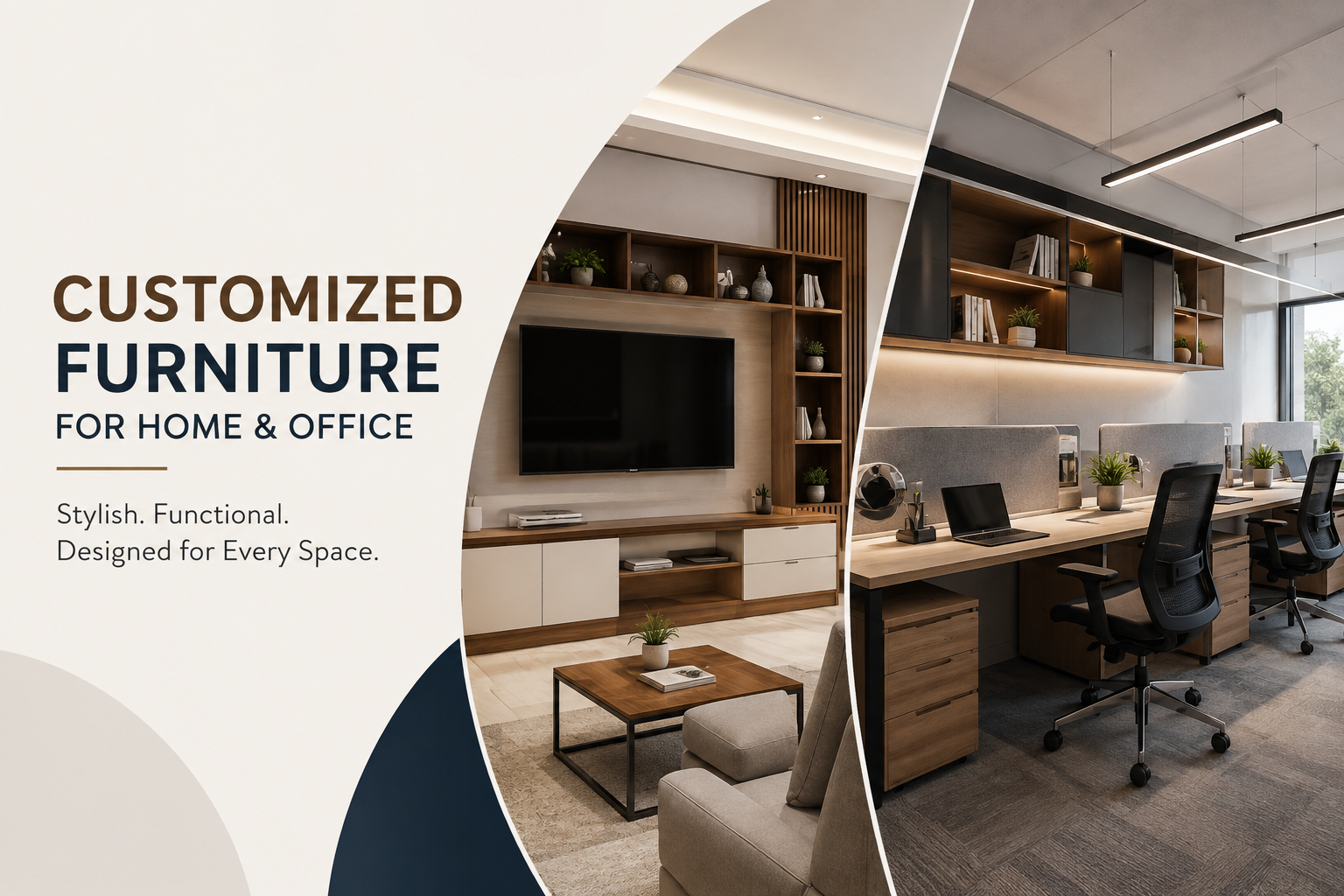
Furniture plays an important role in defining how a space looks, feels, and functions. Whether it is a comfortable home, a professional office, a creative studio, or a commercial workspace, the right furniture can make everyday activities easier while adding character to the interior. Today, more people and businesses are moving towards Customized Furniture Designed specifically around their space, lifestyle, and functional requirements. Unlike mass produced furniture, customized solutions offer greater flexibility in terms of size, layout, materials, finishes, storage, and overall design. This makes them an excellent choice for anyone looking to create interiors that are both practical and visually appealing.
What Makes Customized Furniture a Better Choice?
Every space has its own requirements. A compact apartment may need furniture that uses every available corner, while an office may require smart workstations, storage units, meeting tables, and reception furniture. Standard furniture cannot always provide the right combination of size and functionality. Customized furniture allows the design to be planned around the actual dimensions and purpose of the space. From the initial concept to the final finish, every element can be considered to create a cohesive interior.
Customized Furniture for Modern Homes
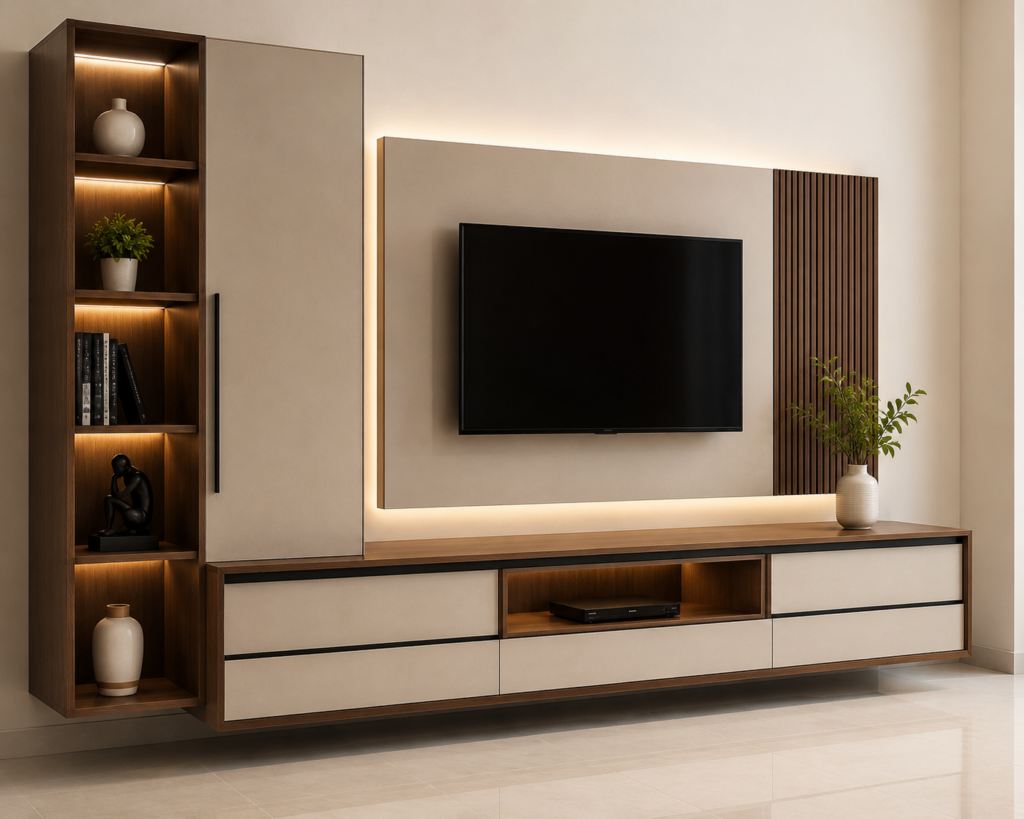
A home should reflect the personality and lifestyle of the people living in it. Customized furniture makes it possible to create interiors that feel personal rather than generic. Living rooms can benefit from customized TV units, display cabinets, bookshelves, storage systems, and seating arrangements. Bedrooms can be enhanced with wardrobes, beds, dressing units, study tables, and bedside storage designed according to the available space. For smaller homes, customized furniture can be particularly useful. Clever storage solutions, multifunctional furniture, and space-saving designs can help maintain an open and organized environment without compromising on style.
Customized Furniture for Modern Offices
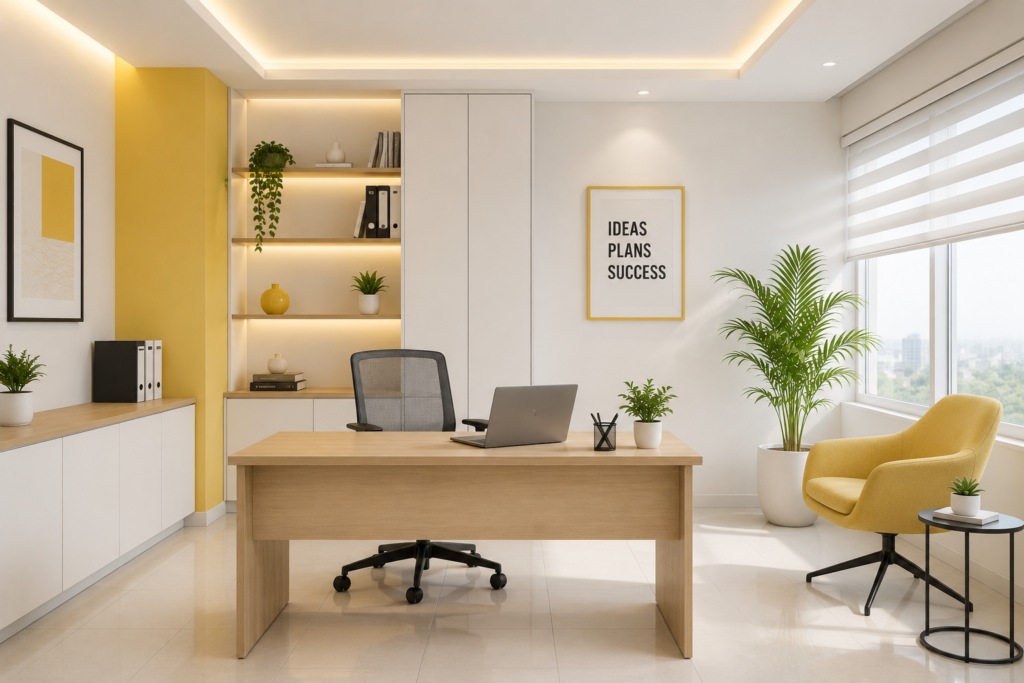
Office furniture needs to do more than look professional. It should support productivity, comfort, collaboration, organization, and the overall identity of a business. A well planned Modern Office Interior Design can include customized workstations, executive desks, reception counters, conference tables, storage units, partitions, and collaborative areas. Each element can be designed to work with the office layout while maintaining a consistent visual language.
For growing businesses, customized furniture can also make it easier to create flexible workspaces that can adapt as teams and requirements change.
Combining Style with Functionality
One of the biggest advantages of customized furniture is the ability to balance appearance with everyday usability. A beautifully designed cabinet, for example, should also provide sufficient storage. An office workstation should look professional while offering enough space for computers, documents, and essential accessories. This balance is especially important in contemporary interiors where clean lines and uncluttered spaces are becoming increasingly popular. Thoughtful furniture design can help create interiors that look sophisticated without sacrificing practical needs.
Choosing Materials, Colours and Finishes
Customization gives homeowners and businesses more control over the visual details of their furniture. Materials, colours, textures, handles, laminates, wood finishes, glass elements, and other details can be selected according to the overall interior theme. For a home, warm wood tones and subtle finishes can create a welcoming atmosphere. In an office, neutral colours, contemporary textures, and clean finishes can contribute to a professional and organized environment. The goal is not simply to select attractive materials but to create a combination that complements the architecture and purpose of the space.
Customized Furniture Can Make Better Use of Space
Poorly planned furniture can make even a large room feel cramped, while well-designed furniture can make a smaller space feel more comfortable. This is why space planning is an important part of customized furniture design. Furniture can be created to fit specific wall lengths, corners, columns, windows, niches, and other architectural features. This helps reduce unused areas and creates a more efficient layout. In offices, intelligent space planning can also improve movement between workstations, meeting areas, storage zones, and common spaces.
Furniture That Reflects Your Brand
For businesses, office interiors can become an extension of their brand identity. The reception area, workstations, meeting rooms, and executive spaces all contribute to how clients and employees perceive an organization. Customized furniture can incorporate brand colours, preferred materials, specific layouts, and design elements that create a distinctive workplace environment. When combined with thoughtful Modern Office Interior Design, furniture can help create a workspace that feels professional, consistent, and memorable.
Why Work with a Professional Furniture Design Team?
Customized furniture requires more than choosing a design from a catalogue. Measurements, material selection, functionality, proportions, finishes, installation, and the overall interior layout all need to work together. Working with an experienced design team can help simplify this process. Professionals can understand the requirements, suggest practical solutions, create designs around the available space, and ensure that the final furniture complements the overall interior.
Creating Spaces Designed Around You
Whether you are furnishing a new home, renovating an existing property, setting up a new office, or upgrading a commercial workspace, customized furniture provides the freedom to create something suited specifically to your needs. The right furniture should not simply occupy space. It should improve how the space is used, support everyday activities, complement the interior design, and reflect the personality or identity of the people using it. With Customized Furniture Designed around your requirements and thoughtful Modern Office Interior Design, both residential and professional spaces can become more functional, comfortable, and visually engaging.
Final Thoughts
Customized furniture is no longer limited to luxury interiors. It has become a practical solution for homes, offices, studios, and commercial spaces where functionality and individuality matter. By combining intelligent space planning, quality materials, contemporary aesthetics, and practical design, customized furniture can help create interiors that work better and look better. Whether your goal is a stylish home or a productive modern workplace, investing in furniture designed specifically for your space can make a meaningful difference.
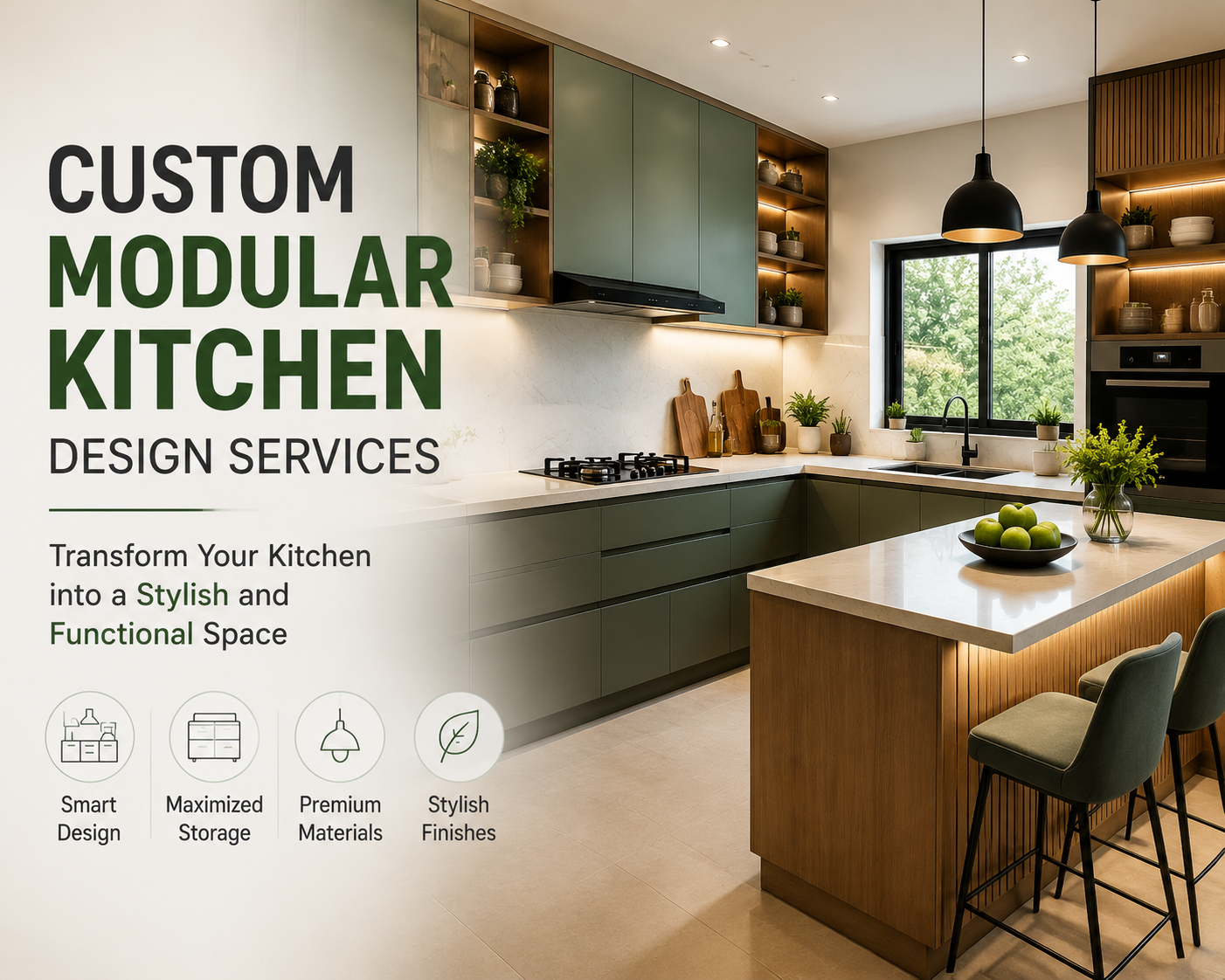
The kitchen has changed a lot over the years. It is no longer simply a place where meals are prepared. In many modern homes, the kitchen is where families gather, conversations happen and everyday routines begin and end. That is why choosing the right kitchen design is about much more than selecting attractive cabinets or countertops. A well-designed kitchen should fit the available space, support your daily habits and make cooking and storage easier.This is where custom modular kitchen design services can make a real difference. Instead of trying to fit your lifestyle into a standard kitchen layout, a customized modular kitchen is planned around you.
What Is a Custom Modular Kitchen?
A modular kitchen consists of pre-designed units such as cabinets, drawers, shelves and storage modules that are assembled to create a complete kitchen. A custom modular kitchen takes this concept one step further.The design is adapted to the size and shape of your kitchen, your storage requirements, cooking habits, preferred materials and overall interior style. Whether you have a compact apartment kitchen or a spacious family kitchen, customization allows the available space to be used more intelligently.
The result is a kitchen that feels like it belongs to your home rather than looking like a standard installation.
Why Customization Matters
Every household uses its kitchen differently. One family may need extensive storage for utensils and appliances. Another may want a large preparation counter. Someone who cooks every day may prioritise easy access to frequently used ingredients, while another homeowner may be more interested in creating a stylish open kitchen for entertaining guests.
A standard layout cannot always accommodate these differences.With custom modular kitchen design, details can be planned according to your requirements from cabinet heights and drawer sizes to appliance placement and storage zones.
This makes the kitchen more comfortable to use every day.
Making the Most of Available Space
Space is one of the biggest challenges in modern homes, particularly apartments. A small kitchen does not necessarily mean you need to compromise on functionality. With thoughtful planning, corners, vertical areas and awkward spaces can be converted into useful storage. Tall cabinets can make use of vertical space. Pull-out units can make narrow areas more practical. Corner storage solutions can prevent difficult-to-reach spaces from being wasted.
For larger kitchens, customization can help create separate zones for preparation, cooking, cleaning and storage.Good design is not simply about adding more cabinets. It is about making every part of the kitchen work better.
Storage Designed Around Your Routine
Kitchen storage should make everyday life easier, not more complicated. Think about the things you use most often. Plates, glasses, spices, cooking utensils, groceries and appliances all need their own practical locations.
A customized kitchen allows storage to be planned around these habits.
Frequently used items can be kept within easy reach, while less frequently used appliances or cookware can be stored in larger or higher cabinets.
Organised storage also helps keep countertops clear, making the entire kitchen look cleaner and more spacious.
Choosing the Right Kitchen Layout
The layout is one of the most important decisions in kitchen planning.
Depending on the size and shape of the room, options may include L-shaped, U-shaped, straight-line or parallel kitchen layouts.
The right choice depends on factors such as:
Available floor space
Number of people using the kitchen
Cooking habits
Appliance requirements
Storage needs
Ventilation and natural light
A professional design approach considers these elements together instead of choosing a layout simply because it looks good in a photograph.
Materials and Finishes That Match Your Home
A kitchen should complement the rest of your interiors.
Modern modular kitchens can be designed using a wide range of finishes, colours and materials. Homeowners can choose from contemporary, minimalist, classic, industrial or more traditional aesthetics.
Matte finishes can create a subtle and sophisticated appearance, while glossy surfaces can give smaller kitchens a brighter and more spacious feel.
Wood-inspired finishes can add warmth, whereas neutral shades can create a timeless look.
The important thing is to choose finishes that suit both your personal taste and the practical demands of a kitchen.
Functionality Should Come Before Decoration
A beautiful kitchen is enjoyable to look at, but a functional kitchen is enjoyable to use.
Before finalising the design, it is worth considering simple everyday questions:
Where will the refrigerator go?
Is the cooking area close enough to the preparation counter?
Can two people comfortably work in the kitchen?
Where will small appliances be stored?
Is there enough space to open drawers and cabinet doors?
Where will cleaning supplies be kept?
These details may seem small during the design stage, but they can have a major impact on everyday convenience.
Lighting Can Change the Entire Kitchen
Kitchen lighting is often overlooked during renovation.
A combination of ambient, task and accent lighting can make the space more comfortable and visually appealing.
Under-cabinet lighting can illuminate preparation areas, while ceiling lights provide general brightness. Decorative lighting can also add character to an open or modern kitchen.
Natural light should be considered wherever possible. A kitchen with good daylight can feel more welcoming during the day and may reduce the need for artificial lighting.
Designing for the Future
A kitchen is a long-term investment, so it is worth thinking beyond current trends.
Instead of choosing a design purely because it is fashionable today, consider whether you will still enjoy it several years from now.
Durable materials, practical storage, easy-to-maintain finishes and a timeless layout can help your kitchen remain useful and attractive for longer.
Customization also allows you to plan for future needs, such as additional appliances or changing family requirements.
Why Work with Professional Kitchen Designers?
Planning a modular kitchen involves many individual decisions. Cabinets, hardware, materials, measurements, electrical points, plumbing, appliances, lighting and storage all need to work together.
Professional modular kitchen designers can bring these elements into one coordinated plan.
They can also help identify practical issues that may not be obvious to homeowners during the initial planning stage.
A professional design process typically begins with understanding the space and the client’s requirements before moving into layout planning, material selection and final execution.
This structured approach can make the entire process smoother.
A Kitchen Should Feel Personal
The best kitchens are not necessarily the biggest or the most expensive.
They are the ones that make everyday activities easier.
Your kitchen should reflect how you live, cook, organise and spend time at home. That is why customization is so valuable. It gives you the flexibility to create a space that works for your particular lifestyle.
Whether you want a compact and efficient kitchen for an apartment or a spacious statement kitchen for a larger home, the right design can combine aesthetics with practicality.
Transform Your Kitchen with Decor-x
A thoughtfully designed kitchen can completely change the way you experience your home.
With custom modular kitchen design services, you can move beyond generic layouts and create a space that is tailored to your requirements from storage and workflow to materials, finishes and overall appearance.
At Decor-x, the focus can be on bringing together design, functionality and your personal vision to create a kitchen that is practical today and adaptable for years to come.
Because a kitchen should not simply look beautiful.
A modern office is no longer just a room filled with desks, chairs and meeting tables. The way a workspace is designed can influence how people work, communicate, concentrate and experience the brand they represent. For businesses in Kolkata, this has made Modern Office Interior Design an important part of creating a professional and productive workplace. At Decor-x, office interiors are approached with a balance of functionality, aesthetics, smart space planning and practical execution. The company works across Kolkata and areas including Salt Lake, New Town and Rajarhat.
What Makes Modern Office Interior Design Different
A modern office design is not about adding expensive furniture or following the latest visual trend. It starts with understanding how a business actually operates. Where do employees spend most of their time? Which teams need to collaborate? Does the office require private cabins, meeting rooms, informal discussion areas or quiet zones? How much storage is needed? Can the layout adapt as the company grows? These questions form the foundation of good office planning. A well designed workplace should make everyday activities easier while creating an environment that employees enjoy spending time in.
Smart Space Planning Comes First
One of the most important elements of Modern Office Interior Design is efficient use of available space.
A thoughtfully planned office can include dedicated areas for:
Open workstations
Executive cabins
Meeting rooms
Conference rooms
Reception areas
Collaboration zones
Breakout spaces
Storage
Employee lounges
The objective is not simply to fit more furniture into a room. The objective is to create a natural flow between different areas. For example, a collaborative team may benefit from an open workstation arrangement, while management or HR teams may require greater privacy. A meeting room positioned close to the reception area can also make client visits more convenient. This type of planning helps create an office that supports the way people actually work.
Creating a Professional First Impression
The reception area is often the first physical interaction a client has with a company. That makes it an important part of office interior planning. A modern reception can communicate the company’s personality through materials, lighting, colours, furniture, branding and architectural details. A technology company may prefer a clean and contemporary appearance, while a financial or consulting firm may choose a more sophisticated and understated environment. The goal is to make the space feel professional without making it unnecessarily formal.
Ergonomics Should Be Part of the Design
A beautiful office is not necessarily a comfortable office. Employees spend a significant portion of their day at their workstations, which makes ergonomic planning essential. Proper desk heights, comfortable seating, appropriate lighting and sensible workstation spacing can make everyday work more comfortable. Ergonomic furniture can also be integrated into the overall design rather than treated as a separate requirement. This is where good office interior design combines appearance with practical thinking.
Modern Office Furniture and Modular Solutions
Furniture plays a major role in determining how an office looks and functions. Modular workstations are particularly useful because they can be planned around different team sizes and working styles. Storage systems, partitions, executive desks and meeting furniture can also be integrated into the overall workspace. Decor-x focuses on modular workspace solutions, office furniture and turnkey commercial interior projects as part of its office design services. The advantage of a coordinated approach is that furniture, lighting, partitions, colours and architectural elements can work together instead of looking like separate additions.
Lighting Can Change the Entire Workspace
Lighting is sometimes overlooked during office planning, even though it can dramatically influence the atmosphere of a workplace. A modern office can combine natural light with carefully planned artificial lighting. Workstations may require focused illumination, while reception areas and breakout zones can use softer lighting to create a different mood. Good lighting design can also highlight architectural features, branding elements and important areas within the office.
Sustainable Office Interior Design
Sustainability is becoming increasingly relevant to modern businesses. An office can incorporate environmentally conscious materials, energy efficient lighting and durable furniture without compromising its visual appeal. Smart space planning can also reduce unnecessary construction and improve the long term usability of the workspace. Decor-x highlights eco conscious materials, sustainable processes, energy efficient lighting and ergonomic solutions as part of its approach to office interiors. Sustainable design is ultimately about creating spaces that remain useful, comfortable and visually relevant for years rather than following short lived trends.
Designing Offices around Company Culture
Every company has its own working culture. Some businesses encourage open communication and teamwork. Others require concentration, privacy and frequent client meetings. A startup may need flexible spaces that can change as the team expands, while an established corporate office may require clearly defined departments and formal meeting areas. This is why a successful Modern Office Interior Design should be customised rather than copied from another workplace.
The design should reflect the company’s brand while supporting its employees.
Modern Office Interior Design in Kolkata
Kolkata has a diverse commercial landscape, from established corporate areas to rapidly developing business hubs. Locations such as Salt Lake, New Town, Rajarhat, Park Street and EM Bypass have different types of commercial spaces and business requirements. Decor-X provides office interior solutions across these areas, with services covering workspace planning, modular office systems and turnkey execution. Whether it is a startup workspace in New Town or a corporate office in Salt Lake Sector V, the right design approach begins with understanding the business, available space and long term requirements.
Why Choose a Turnkey Office Interior Approach
Managing designers, contractors, furniture suppliers and other vendors separately can make an office renovation complicated. A turnkey approach brings these stages together under one project.
The process can include:
Concept → Space Planning → Design → Material Selection → Procurement → Execution → Installation → Handover
This can make communication easier and help maintain greater consistency throughout the project. Decor-x provides turnkey office interior services covering design, procurement, execution and final handover.
A Modern Office Is an Investment in Your Business
The right office interior is about more than appearance. It can help create a better employee experience, make client interactions more professional, improve the use of available space and provide an environment that supports the company’s working culture. That is why Modern Office Interior Design should be approached as a business decision rather than simply a decoration project. A well planned workspace should look good today while remaining practical as the business grows.
Build a Workspace Designed for the Future
Your office should represent where your business is going, not where it has been. From intelligent space planning and modular workstations to ergonomic furniture, sustainable materials and carefully considered lighting, every element can contribute to a more productive and professional environment. If you are planning a new office or considering a complete workspace transformation in Kolkata, Decor-x offers Modern Office Interior Design and turnkey workspace solutions tailored to different business requirements.
Plan smarter. Design better. Build a workspace that works for your business.
The modern workplace is evolving rapidly, and office interiors are no longer designed solely for functionality. Today, businesses recognize that a thoughtfully designed workspace can improve productivity, strengthen brand identity, enhance employee well being, and create memorable experiences for clients. As organizations embrace hybrid work models and technological advancements, Modern Office Interior Design has become a key investment for long term business growth. In 2026, office design focuses on flexibility, sustainability, innovation, and employee centric spaces that inspire creativity and collaboration.
Flexible Workspaces for Hybrid Teams
One of the biggest trends in Modern Office Interior Design is the shift towards flexible workspaces. Traditional cubicles are gradually being replaced by adaptable layouts that support different working styles. Businesses are incorporating collaborative zones, hot-desking, private meeting pods, breakout areas, and quiet workstations to provide employees with greater flexibility. These dynamic environments encourage teamwork while allowing individuals to work efficiently based on their daily tasks. Flexible office layouts also maximize available space, making them ideal for businesses planning future expansion.
Bringing Nature Indoors with Biophilic Design
Biophilic design continues to dominate office interiors in 2026 as businesses recognize the positive impact of nature on employee well-being. Modern workplaces now feature indoor plants, vertical gardens, natural wood finishes, stone textures, and large windows that maximize natural daylight. These elements create a calming atmosphere, reduce workplace stress, improve air quality, and increase employee satisfaction. Incorporating natural materials not only enhances aesthetics but also contributes to a healthier and more productive work environment.
Smart Technology Creates Intelligent Workspaces
Technology is becoming an integral part of Modern Office Interior Design, helping businesses create efficient and connected workplaces. Smart lighting systems, automated climate control, touchless access, AI enabled meeting rooms, wireless charging stations, and digital collaboration tools are now standard features in contemporary office spaces. These technologies improve operational efficiency while reducing energy consumption, making offices both intelligent and sustainable. As businesses become increasingly digital, technology-driven office interiors are becoming essential rather than optional.
Sustainable Office Design Takes Priority
Environmental responsibility is shaping the future of commercial interiors. Companies are increasingly choosing eco-friendly materials, recycled furniture, energy efficient lighting, low VOC paints, and sustainable flooring to reduce their environmental impact. Sustainable office interiors not only lower operating costs but also demonstrate a company’s commitment to responsible business practices. Green workspaces appeal to environmentally conscious employees and clients while contributing to healthier indoor environments.
Employee Wellness Becomes a Design Priority
Employee wellness is now at the heart of office design. Businesses understand that healthy employees are more engaged, creative, and productive. As a result, modern offices are incorporating wellness rooms, meditation spaces, ergonomic workstations, fitness corners, comfortable lounges, and breakout areas where employees can relax and recharge. These wellness-focused spaces improve mental health, reduce workplace stress, and foster a positive organizational culture, ultimately contributing to higher employee retention.
Brand Identity through Interior Design
Office interiors have become an extension of a company’s brand. Businesses are using design elements such as customized reception areas, feature walls, corporate colors, branded graphics, digital displays, and artwork to communicate their values and culture. A well-designed office reinforces brand identity while creating a lasting impression on visitors, clients, and potential employees. It also helps employees feel connected to the organization’s mission and vision, strengthening workplace engagement.
Minimalist Design with Maximum Functionality
Minimalism continues to influence Modern Office Interior Design, offering clean, clutter-free spaces that encourage focus and efficiency. Neutral color palettes, streamlined furniture, concealed storage, and open layouts create an organized and sophisticated working environment. Every design element serves a purpose, ensuring that office spaces remain functional without compromising visual appeal. Minimalist offices also provide flexibility for future modifications as businesses evolve.
Acoustic Solutions for Better Productivity
With open plan offices remaining popular, managing workplace noise has become increasingly important. Businesses are investing in acoustic panels, soundproof meeting rooms, privacy pods, ceiling baffles, and fabric wall treatments to minimize distractions. Effective acoustic design creates quieter workspaces where employees can concentrate, communicate effectively, and collaborate without interruptions. These solutions significantly improve employee comfort and overall workplace productivity.
Reception Areas That Reflect Professionalism
The reception area is often the first point of interaction between a business and its visitors. In 2026, reception spaces are designed to create strong first impressions through elegant lighting, premium materials, digital welcome screens, comfortable seating, and carefully curated decor. A professionally designed reception communicates credibility, trust, and attention to detail while reinforcing the company’s brand image. It sets the tone for every client meeting and business interaction.
Why Modern Office Interior Design Matters
Investing in Modern Office Interior Design is about far more than creating an attractive workspace. A thoughtfully designed office improves employee productivity, enhances collaboration, strengthens brand identity, supports employee well-being, and leaves a positive impression on clients. As businesses continue to adapt to changing work cultures and technological advancements, creating future ready office environments has become essential for maintaining a competitive advantage.
Conclusion
The office of 2026 is smarter, greener, and more people-focused than ever before. Flexible workspaces, sustainable materials, intelligent technology, wellness-centered environments, and strong brand integration are redefining how businesses approach workplace design. Companies that embrace these trends are creating inspiring environments that attract talent, improve operational efficiency, and foster long term growth. At Decor-x, we specialize in creating innovative and functional office interiors that combine aesthetics with performance. Whether you are planning a new office, renovating an existing workspace, or designing a collaborative environment, our expert team delivers customized solutions that align with your business objectives. Let Decor-x help you transform your workplace with Modern Office Interior Design that is built for the future.
Today’s workplace is more than just a place where employees complete daily tasks. It is an environment that influences creativity, collaboration, mental well being, and overall business performance. Companies are increasingly investing in Modern Office Interior Design to create workspaces that inspire innovation, improve employee satisfaction, and enhance productivity. Whether you’re setting up a new office or renovating an existing workspace, choosing professional Office Interior Solutions Across Kolkata can transform your office into a dynamic environment that supports both employees and business growth.
The Connection Between Office Design and Employee Productivity
Research has consistently shown that workplace design has a direct impact on employee performance. Factors such as lighting, space planning, furniture, acoustics, and ventilation influence concentration, motivation, and overall job satisfaction. A thoughtfully planned Modern Office Interior Design creates an atmosphere where employees feel comfortable, engaged, and motivated to perform at their best.
Benefits of Modern Office Interior Design
1. Enhances Employee Focus
A clutter free and well organized office minimizes distractions. Dedicated workstations, quiet zones, and intelligent layouts help employees stay focused throughout the day. Professional Office Interior Solutions Across Kolkata ensure every square foot is utilized efficiently without making the office feel crowded.
2. Encourages Collaboration
Modern businesses thrive on teamwork. Open collaboration areas, meeting pods, brainstorming spaces, and flexible seating arrangements encourage communication and knowledge sharing. A well planned Modern Office Interior Design balances open spaces with private work areas, allowing employees to collaborate while maintaining the option for focused work.
3. Supports Employee Well-Being
Employee wellness has become a major priority for organizations. Comfortable furniture, ergonomic workstations, proper lighting, and improved air circulation contribute to physical and mental well being. Professional Office Interior Solutions Across Kolkata incorporate wellness focused design elements that reduce workplace stress and improve employee comfort.
4. Maximizes Space Utilization
Every office has unique space requirements. Intelligent planning helps businesses make the most of available space without compromising functionality. Experienced designers offering Office Interior Solutions Across Kolkata create layouts that optimize workflow, storage, meeting spaces, and employee movement.
5. Strengthens Brand Identity
Your office reflects your company’s culture and values. Visitors, clients, and employees form impressions based on your workspace. A customized Modern Office Interior Design incorporates your brand colors, logo, design aesthetics, and corporate identity to create a professional and memorable environment.
Essential Elements of Modern Office Interior Design
Ergonomic Furniture
Comfortable chairs, adjustable desks, and proper workstation heights reduce fatigue and improve posture, allowing employees to remain productive for longer hours.
Natural Lighting
Large windows and strategically placed lighting create brighter workspaces that boost mood, reduce eye strain, and improve energy levels.
Flexible Workspaces
Modern offices include breakout zones, collaborative areas, private cabins, and hybrid workspaces that accommodate different working styles.
Smart Storage Solutions
Efficient storage systems reduce clutter and help maintain an organized workspace.
Green Design Elements
Indoor plants, natural materials, and sustainable finishes improve air quality while creating a calming atmosphere.
Why Businesses Choose Office Interior Solutions Across Kolkata
Businesses across Kolkata are recognizing the importance of investing in professional office interiors. Experienced interior experts provide end-to-end services, including:
Space planning
Office layout design
Turnkey execution
Modular office furniture
Lighting design
False ceiling solutions
Flooring installation
Electrical planning
Branding integration
Project management
Reliable Office Interior Solutions Across Kolkata ensure projects are completed efficiently while maintaining high standards of quality and functionality.
How Smart Office Design Improves Employee Retention
Employees are more likely to stay with organizations that invest in their comfort and workplace experience. Attractive offices foster motivation, improve morale, and strengthen company culture. A professionally executed Modern Office Interior Design demonstrates that a business values its workforce, leading to higher engagement, reduced absenteeism, and improved employee retention.
Future-Proof Your Workplace
As businesses continue adopting hybrid work models and flexible office concepts, workspace design must evolve accordingly.
Modern office interiors now include:
Hybrid workstations
Collaborative meeting areas
Video conferencing rooms
Acoustic panels
Multi-purpose workspaces
Energy-efficient lighting
Sustainable materials
These features create agile workplaces that can adapt to future business needs.
Why Choose Decor-x?
At Decor-x we specialize in delivering innovative Modern Office Interior Design solutions that combine aesthetics, functionality, and business efficiency. Our comprehensive Office Interior Solutions Across Kolkata are tailored to meet the unique requirements of startups, SMEs, and corporate organizations. From concept development and space planning to turnkey execution and project management, our experienced team creates workspaces that inspire productivity, improve employee well being, and leave a lasting impression on clients.
A well designed office is more than just a workspace it reflects your brand identity, enhances employee productivity, and creates a positive impression on clients and visitors. Whether you are setting up a new office or renovating an existing one, choosing the right Office Interior Company in Kolkata is one of the most important decisions for your business.With numerous interior design firms offering a variety of services, finding the ideal partner can seem overwhelming. This guide will help you understand the key factors to consider when selecting an Office Interior Company in Kolkata that aligns with your business goals and workspace requirements.
Understand Your Office Interior Requirements
Before approaching an interior design company, define your objectives clearly. Consider factors such as:
Office size and layout
Number of employees
Brand aesthetics
Budget
Functional requirements
Future expansion plans
Having a clear vision will help you communicate your expectations and enable the interior company to provide suitable solutions.
Check Experience and Portfolio
Experience is one of the most important indicators of a reliable Office Interior Company in Kolkata. Review the company’s previous projects and portfolio to assess their expertise in designing different types of office spaces.
Look for projects involving:
Corporate offices
IT companies
Co working spaces
Startups
Commercial establishments
Executive offices
A strong portfolio demonstrates creativity, technical expertise, and the ability to handle projects of varying scales.
Evaluate Design Capabilities
Every business has unique requirements. The best office interior designers understand how to blend aesthetics with functionality.
A professional Office Interior Company in Kolkata should offer:
Space planning
Workstation design
Reception area design
Conference room design
Breakout and collaboration spaces
Lighting solutions
Storage optimization
The goal should be to create a workspace that promotes productivity while reflecting your company’s culture and values.
Look for Turnkey Interior Solutions
Managing multiple vendors can lead to delays and coordination challenges. Choosing a company that provides turnkey solutions can simplify the entire process. Turnkey office interior services typically include:
Design consultation
3D visualization
Material selection
Civil work
Electrical work
Furniture installation
Project management
Working with a single service provider ensures better quality control and timely project completion.
Check Client Reviews and Testimonials
Client feedback provides valuable insight into a company’s professionalism, communication, and project execution capabilities. When evaluating an Office Interior Company in Kolkata, look for reviews mentioning:
Timely delivery
Design quality
Budget management
Customer service
Project coordination
Positive testimonials often indicate consistent client satisfaction and reliability.
Consider Budget and Transparency
Office interior design is an investment, and understanding the cost structure is essential. A trustworthy company will provide a detailed quotation outlining:
Design fees
Material costs
Labor charges
Furniture costs
Additional expenses
Avoid companies that provide vague estimates or hidden charges. Transparency helps prevent unexpected costs during project execution.
Focus on Space Optimization
Modern offices require efficient use of available space. An experienced Office Interior Company in Kolkata can create layouts that maximize functionality while maintaining a comfortable working environment.
Smart space planning can improve:
Employee productivity
Team collaboration
Workflow efficiency
Storage management
Visitor experience
Optimized office layouts contribute significantly to business performance and employee satisfaction.
Assess Project Management Capabilities
Timely completion is critical for minimizing business disruption. Choose an interior company that follows a structured project management process and provides regular updates throughout the project lifecycle.
Professional project management ensures:
Adherence to timelines
Quality control
Budget compliance
Smooth coordination between teams
This level of organization can significantly reduce stress during office setup or renovation.
Importance of Modern Office Design
Today’s businesses are increasingly focusing on employee well being and workplace experience. Modern office interiors incorporate:
Ergonomic furniture
Natural lighting
Collaborative workspaces
Acoustic solutions
Sustainable materials
Flexible work environments
A forward thinking Office Interior Company in Kolkata will stay updated with current design trends and workplace innovations.
Why Choose Decor-X?
As a trusted Office Interior Company in Kolkata, Decor-X specializes in creating functional, aesthetically appealing, and productivity-focused office environments. From concept development to turnkey execution, Decor-X delivers customized interior solutions tailored to the unique needs of modern businesses. Whether you’re planning a corporate office, startup workspace, co-working facility, or commercial establishment, Decor-X helps transform your vision into a professional and inspiring work environment.
Final Thoughts
Choosing the right Office Interior Company in Kolkata requires careful evaluation of experience, design expertise, project management capabilities, and client satisfaction. A thoughtfully designed office not only enhances operational efficiency but also strengthens your brand image and employee engagement. Investing in professional office interiors is an investment in your business’s future. By partnering with a reliable interior design company, you can create a workspace that supports growth, innovation, and long-term success.
In today’s fast evolving corporate world, the workplace is no longer just a physical space where employees sit and work. It has become a reflection of brand identity, company culture, and operational efficiency. A well planned Comprehensive Office Interior design plays a crucial role in shaping how people think, collaborate, and perform every day. Businesses are now actively investing in intelligent workspace design to boost productivity, improve employee well being, and create a lasting impression on clients. This is where expert design execution becomes essential.
What is Comprehensive Office Interior Design?
A Comprehensive Office Interior approach goes beyond simple decoration or furniture placement. It is a complete end to end planning process that includes:
Space planning and layout optimization
Lighting design and ambience creation
Ergonomic furniture selection
Acoustic and privacy solutions
Branding integration within interiors
Efficient workflow zoning
Modern technology integration
The goal is to create a workspace that is not only visually appealing but also highly functional and performance driven.
Why Office Interiors Matter More Than Ever
Modern employees spend a significant portion of their day in the office. Poorly designed spaces can lead to discomfort, distraction, and reduced efficiency. On the other hand, thoughtfully designed interiors can:
Improve focus and productivity
Encourage collaboration and creativity
Enhance employee satisfaction and retention
Reflect a strong and professional brand identity
A well executed Comprehensive Office Interior ensures that every square foot of space contributes meaningfully to business growth.
The Rise of Smart and Functional Workspaces
Today’s office interiors are shifting towards flexibility and intelligence. Open layouts, breakout zones, collaborative areas, and wellness focused designs are becoming standard.
Companies are now prioritizing:
Modular furniture systems
Natural lighting and ventilation
Minimalist yet functional aesthetics
Sustainable and eco-friendly materials
This transformation is helping businesses build environments where employees feel motivated and valued.
Choosing the Right Office Interior Partner in Kolkata
Selecting the right design partner is critical for achieving a truly impactful workspace. Businesses often search for the best office interior design company in Kolkata to ensure professional execution, creative innovation, and timely delivery.
A reliable interior design company should offer:
End-to-end project management
Customized design solutions based on business needs
Strong technical expertise and execution capability
Experience across corporate, retail, and commercial spaces
Transparent budgeting and timeline management
With the right team, even the most complex office spaces can be transformed into efficient, inspiring environments.
Comprehensive Office Interior for Modern Businesses
Whether it is a startup office, corporate headquarters, or co working space, a Comprehensive Office Interior approach ensures that design aligns with business goals. From reception areas that create strong first impressions to workstations that maximize productivity, every detail matters. The integration of design, functionality, and brand storytelling creates a powerful workspace experience.
Conclusion
In a competitive business environment, office interiors are no longer optional they are strategic assets. A thoughtfully executed Comprehensive Office Interior design can significantly influence productivity, employee morale, and client perception.For businesses aiming to create impactful workspaces, partnering with the best office interior design company in Kolkata ensures that vision is translated into reality with precision and creativity.A well designed office is not just a place to work it is a place where ideas grow, teams thrive, and success begins.
Scroll to Top
Not sure about Decor-x?
Get a Free Design Consultation
By submitting this form, you agree to our Privacy Policy & Terms of use, granting us permission to use your personal information as specified in the privacy policy.